


NCBA Takes 100 East African Businesses to China as Kenya Tries to Close a KSh500 Billion Trade Gap
More than 100 business owners from Kenya, Uganda, Tanzania and Rwanda will travel to Beijing and Guangzhou this month on NCBA’s China Market Linkage & Business Exposure Programme. The bank says it is the first time it has run the programme across its East African markets. The group was briefed at a regional pre-departure forum in Nairobi on 2 October.
What the programme involves
The 12-day trip runs from 13 to 24 October and is open to NCBA’s small, medium and large enterprise customers. According to the bank, participants will meet manufacturers, exporters and international suppliers, tour industrial parks and production facilities, and visit wholesale markets matched to their industries. The centrepiece is the Canton Fair in Guangzhou, one of the world’s largest trade exhibitions.

NCBA lists manufacturing, agribusiness, electronics, construction, automotive, consumer goods, renewable energy and technology among the sectors on the itinerary. The pre-departure forum gave participants market briefings and networking time, with structured business-to-business meetings planned in China.
Why China, and why now
China is one of Kenya’s biggest trading partners, and the relationship is lopsided. Kenya’s Foreign Affairs ministry estimates the bilateral deficit at more than KSh500 billion, around $4 billion. Official data put Kenya’s 2024 exports to China at about $197 million against roughly $4.3 billion in imports. mfa thecoast
The Early Harvest Agreement is Kenya’s main attempt to shift that balance. It is an interim deal, and it gives Kenyan exports duty-free access to about 98.2% of Chinese tariff lines and has been in force since May. A full trade agreement has not yet been signed. The government has said the early focus is agriculture, and avocados, tea, coffee and macadamia nuts are the products officials most often name. AGOA Lifeline to 2028 and a China Deal in Motion: Kenya’s Two-Track Trade Strategy +2
Access is not the same as exports
The harder question is whether duty-free access turns into actual sales. Analysts have warned that lower Chinese tariffs won’t improve Kenya’s trade balance unless exporters can supply processed, standards-compliant goods reliably and in volume. Tariff removal does not create processing lines, working capital or dependable delivery schedules. Programmes that put exporters in front of buyers and suppliers are one practical way to start closing that gap, and that is the case NCBA is making for the trip. Whether any of the 100-plus participants land export contracts is the number to watch afterwards. thecoast
What NCBA says it will do after the trip
The bank says it will help customers turn contacts made in China into deals. It lists Trade Finance, Working Capital, Asset Finance, Commercial Lending, Foreign Exchange, Treasury and Transaction Banking among the services available, supported by its presence across Kenya, Uganda, Tanzania and Rwanda. These are the bank’s own descriptions of its offering. Lookout hasn’t assessed the terms, and anyone considering them should compare providers.
A regional delegation
NCBA also frames the trip as a way to connect businesses across the four countries, not only to China. Putting entrepreneurs from Nairobi, Kampala, Dar es Salaam and Kigali on the same itinerary, the bank says, will encourage knowledge-sharing and support regional value chains and intra-African trade.
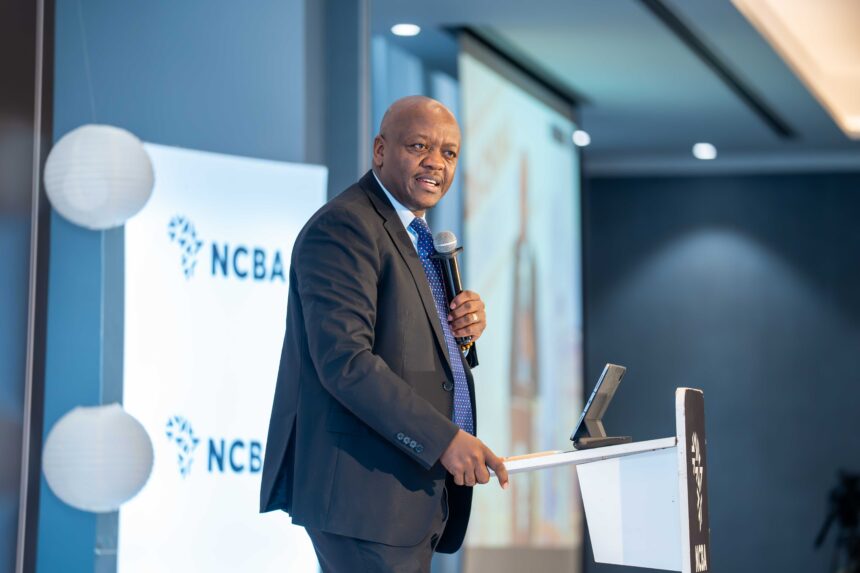
“Businesses need more than financing to compete in an increasingly interconnected world,” said Dennis Njau, NCBA’s Group Director for Retail Banking. “They need access to knowledge, technology, markets, networks and the right partnerships.”
The bank describes the programme as part of its stated purpose of “Banking on Belief, Empowering Ambition.”
Also Read: NCBAs-proft-rises-12-in-the-first-half