



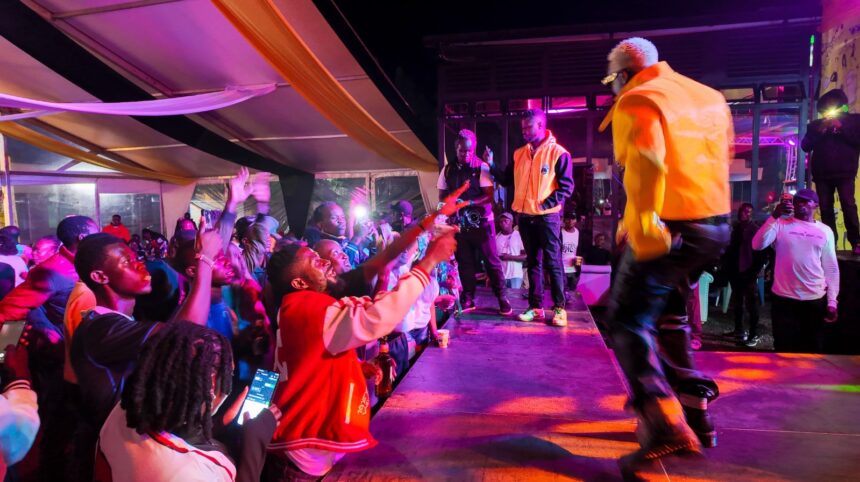
Brand events beyond Nairobi are creating new opportunities for local businesses, creatives and the hospitality industry as major festivals bring music, entertainment and commercial activity to towns across Kenya.
On November 1, Kenyan rap group Wakadinali, Ssaru and Keteh took to the stage at 1922 in Nyali, Mombasa, for a free-entry music experience. Six days later, Willy Paul had fans joining him on stage during his performance in Ugunja, Siaya County, while Tonny Young headlined a Mugithi night in Kiserian.
Different towns, different audiences, but one festival: Tusker Oktobafest, Kenya Breweries Limited’s (KBL) nationwide celebration of beer, music and Kenyan culture, now in its seventh year.
Behind the performances and cheering crowds is a network of businesses and professionals whose livelihoods depend on events of this nature. From sound technicians and photographers to transport operators, caterers and venue owners, a single entertainment event can generate opportunities that extend beyond the stage.

As more brands take their experiences beyond Nairobi, the question that is emerging is, how much of that economic opportunity stays within the communities hosting these events?
The business behind the entertainment
Nairobi has traditionally dominated Kenya’s major concerts, product launches and branded entertainment experiences. With its established venues, production companies, media presence and large audiences, the capital offers advantages that make it a natural choice for event organisers.
But taking these experiences to regional towns opens up opportunities for businesses and creatives that may otherwise struggle to access major corporate clients.
Consider what happens before a concert begins. Stages must be constructed, sound and lighting equipment installed, security arranged and performers transported. Hotels may accommodate visiting crews, while restaurants, retailers and transport operators can benefit from increased activity around the venue.
Each service represents a potential source of income. However, the extent to which a town benefits depends on how much of the event budget is spent locally.
If most equipment, personnel and suppliers are brought in from Nairobi, a significant share of that spending leaves the host economy. But when local photographers, sound engineers, caterers and production companies secure contracts, the benefits can extend beyond a single event.
For a small business, working with a national brand can provide not only income but also experience, professional connections and a stronger portfolio for future assignments.
This is important especially for Kenya’s creative industry, where many professionals have the skills to deliver quality work but face challenges accessing consistent paying opportunities.
Also Read: Oktobafest-ushers-in-festive-season
The 2026 Tusker Oktobafest celebrations illustrate how national entertainment experiences can reach different audiences across the country.
In Mombasa, the November 1 event at 1922 in Nyali featured Wakadinali, Ssaru and Keteh, bringing a major branded music experience to the Coast.
For a city with an established tourism and hospitality industry, such events can complement existing leisure activities while creating opportunities for venues and businesses serving the entertainment sector.
In Ugunja, Siaya County, Willy Paul’s November 7 performance at Nebraska brought a nationally recognised artiste to a smaller town that may not regularly feature on major entertainment schedules.
Beyond giving fans access to live performances closer to home, these experiences demonstrate how brands can connect with audiences through different musical and cultural interests.
They also present commercial opportunities for participating venues.
Tusker Oktobafest operates on a free-entry model, with promotional offers across KBL’s beer portfolio at participating venues. For KBL, the events provide opportunities to engage consumers in their home markets, while host venues have the potential to attract more customers and generate additional sales.
The wider economic impact, however, depends on factors such as local supplier participation, visitor spending and the scale of activity generated around each event.
Building a creative economy beyond Nairobi
Kenya’s creative economy extends far beyond the artistes audiences see on stage. It includes sound engineers, event planners, photographers, designers, filmmakers, content creators and other professionals who support entertainment experiences.
For many of these businesses, growth depends on two things: access to financing and access to paying clients.
A sound engineer may secure financing to purchase better equipment, but that investment only becomes sustainable when there is sufficient demand for their services.
Regional events can help address the second challenge by connecting creative professionals with commercial opportunities.
They can also provide platforms for emerging artistes to reach new audiences and build relationships with event organisers.
However, one-off performances and contracts are not enough to sustain an industry.
The greater opportunity lies in developing regional entertainment markets where local professionals can access regular work, build their businesses and compete for larger assignments.
For brands, this also makes commercial sense. Different regions have distinct audiences, music preferences and cultural influences. A Mugithi-led evening in Kiserian offers a different experience from a hip-hop-focused show in Mombasa.
Adapting experiences to local audiences can strengthen consumer relationships while creating opportunities for regional venues and entertainment professionals.
Measuring what stays behind
A packed venue and enthusiastic audience can make an event look successful. But attendance figures and social media engagement do not tell the full economic story.
To understand the real contribution of regional entertainment, brands and event organisers need to look at what happens beyond the stage.
How many local suppliers were contracted? How many people earned income from the event? Did host venues record increased business? Did visitors travelling from other towns spend money on accommodation, transport and other services?
These are the measures that would help establish whether major events are generating meaningful economic activity within host communities.
There is also value in examining what happens afterwards. A local production company that secures another contract or an emerging artiste who gains new performance opportunities represents a longer-term benefit that attendance numbers cannot capture.
Without such information, the economic case for regional entertainment remains promising, but its actual contribution is difficult to quantify.
Taking the opportunity nationwide
Tusker Oktobafest is scheduled to continue its festive season celebrations, with events planned for Nakuru and Kisumu on November 14, Mombasa on November 21, Nanyuki on November 28, Nakuru and Nyeri on December 5, and Embu on December 12.
The nationwide programme reflects an opportunity for major brands to reach audiences beyond the capital while supporting a broader entertainment ecosystem.
But for this approach to deliver lasting value, local participation must become a deliberate part of event planning rather than an incidental benefit.
Brands and organisers can achieve this by identifying capable regional suppliers, engaging local talent and building relationships that extend beyond individual events. County governments also have a role in providing suitable venues, infrastructure and an enabling environment for entertainment businesses.
Nairobi will remain an important centre for Kenya’s entertainment industry, but it does not have to be the only place where major experiences happen.
Follow us on X for regular updates