



In May, Kenya found out exactly how exposed its transport system really is. A nationwide strike over record fuel prices left matatus, buses, boda bodas, and ride-hailing vehicles grounded, with bus stages that normally overflow standing empty. Diesel had just hit Sh242.92 per litre in Nairobi, the highest price in the country’s recorded history, and the largest single-cycle jump in at least 21 years. Schools closed. Commuters walked or stayed home.
The deeper problem predates any single crisis: Kenya imports every litre of refined fuel it uses, spends roughly $5 billion a year doing it, and has no domestic refining capacity of its own. Every fare hike, every strike, every shilling at the pump is downstream of a vulnerability built decades ago.
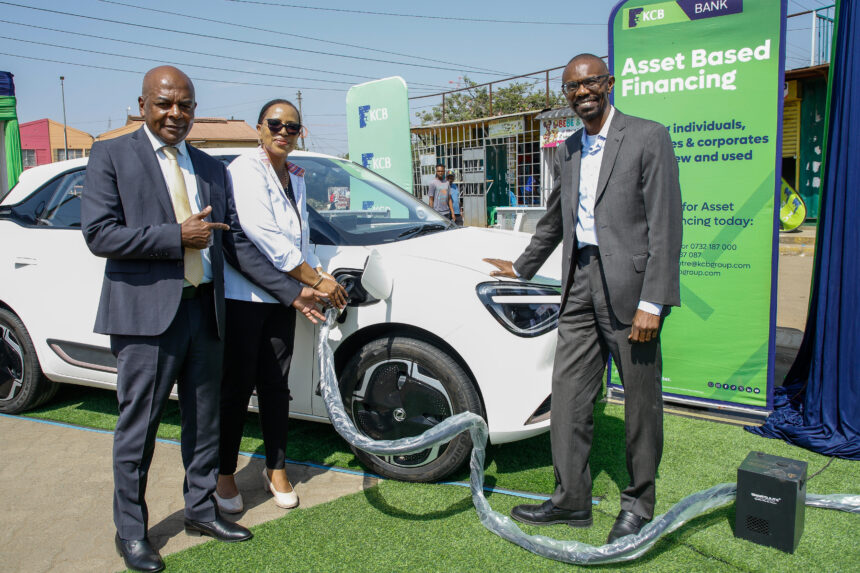
Against that backdrop, KCB Bank Kenya, the Matatu Owners Association (MOA), and ePureMotion have launched a public service vehicle (PSV) electric vehicle (EV) charging Station Site in Nairobi’s Buruburu Estate.
The rollout builds on the KCB Bank Kenya partnership announced in 2024, in which the lender committed to finance towards public transport modernisation, including access to asset finance and insurance premium finance for matatu saccos to upgrade their fleets.

The new EV charging Station Site demonstrates how financial institutions, industry coordination, and technology can be integrated to accelerate the modernisation of the matatu sector. The public transport sector plays a critical role in the country’s socio-economic growth, yet it remains a significant source of Greenhouse Gas Emissions (GHG) and air pollution.
ePureMotion, a leading electric vehicle company in Kenya, based Nairobi is helping turn the shift to electric public transport into reality by providing charging stations, maintenance, spare parts, training, and, in future, electric matatus and digital tools to help operators run their businesses efficiently.
This is not a fix for the crisis, it is however meant to test what an electric matatu actually needs day to day: charging, readiness checks, servicing, and training for operators making the switch. But it is an answer to a question that’s mostly been theoretical in Kenya until now: what does getting matatus off imported diesel actually look like?
MOA president Albert Karakacha , the man who led matatu owners through May’s strike negotiations, framed it as a matter of not being left behind: “The matatu industry has always been the backbone of everyday mobility in Kenya… MOA is taking a deliberate step to ensure that our members are not left behind in the transition to electric mobility.”
The timing lines up with the government’s National Electric Mobility Policy, launched in February, and with a genuine structural argument for going electric: Kenya’s power grid is already overwhelmingly clean, running largely on geothermal, hydro, solar, and wind.
Whether Buruburu’s charging site becomes a template for the rest of the country’s matatu routes, or stays a single pilot, will depend on whether financing like this actually reaches ordinary saccos at scale.